Der athenische General Thukydides musste Athen verlassen, weil seine Landsleute ihm die Schuld an der Niederlage von Amphipolis gaben. Während seines Exils schrieb er acht Bücher über den Peloponnesischen Krieg zwischen Athen und Sparta. Die meisten Sterblichen haben aber nichts über jene Frau gewusst, indem sich der Exilant verliebt hatte. Ich Aphrodite, die Göttin der Liebe, habe dem Dichter Symposios, den Auftrag erteilt den Liebesepos des Thukydides von Athen niederzuschreiben. Thukydides wollte die Welt über die Geopolitik aufklären. Ich, die göttliche Aphrodite, werde aber auch meine wertvollen Lektionen an ihm über die Liebe mitteilen. Bis zu seinem letzten Atemzug wusste Thukydides nicht über meine göttliche Natur.
„Russland ging es immer am besten, wenn es einen starken Mann an seiner Spitze hatte.“ So etwa könnte man das Putin-System beschreiben. Es funktioniert nur durch einen straken Machthaber und ist diese zentrale Figur weg vom Fenster, so bricht das System zusammen. „Organische Demokratie“ ist eher eine strikte Hierarchie, die wenig oder keine Freiheiten zulässt.
Hierarchie, Autorität, Tradition, Neo-Eurasianismus und eine gefrorene Zukunft als nationales Dasein-Konzept als Antwort auf ein Identitätsproblem. Dies sind Werte einiger der Unterstützer des Putinismus‘. Der Westen wird von diesen eher Rechts(radikal)-gerichteten als Bedrohung angesehen, weil es unter liberaler amerikanischer Hegemonie steht. Russland soll hingegen so autonom wie möglich sein sowie auch eine Hegemonialmacht. Die Hegemonie wird als Bewahrung der russischen Identität angesehen und somit legitimiert. Modernität wird in der Technologie gepriesen, aber bei den sozialen Normen verurteilt.
Indes haben Nationalliberale und Linksnationalisten sich hinter Präsident Putins wichtigsten Gegner im Innern gescharrt. Alexey Nawalny nähert sich ebenfalls dem Nationalismus um politisch relevant zu bleiben. Putinisten, Rechtsradikale und National(links)liberale teilen gemeinsam den Stolz der russischen Identität. Diese tolerant-patriotische bis radikal-nationalistische Tendenzen müssen m.E. nicht übersehen werden, wenn der Westen eine friedliche Koexistenz mit seinen russischen Nachbarn will. Einerseits soll der Westen nicht als Konkurrent, Rivale oder Bedrohung angesehen werden und andererseits darf Russland nicht wie in den 1990er in einer Identitätskrise kommen, die nach zahlreichen Niederlagen im Kalten Krieg, Afghanistan und Tschetschenien damit endet, dass das Volk sich hinter einen Populisten scharrt, der ihnen ein neues goldenes Zeitalter verspricht. Hoffen wir auch, dass nach Putins Präsidentschaft die Machtübergabe friedlich ausgehen wird, denn auch in demokratischen Staaten wissen viele nicht wer einen Langezeitherrscher ersetzen soll. Dies ist heute der Fall in Deutschland vor den Bundestagswahlen 2021.
(Die Ideologien des Putins, Dugins and Navalnys werde ich in einer zweiten Version ausführlicher beschreiben.)
In 2020 the Italian aritst Nik Spatari died at the age of 91. He and his wife Hiske Maas build their masterpiece in the province of Reggio di Calabria: from the ruins of the monastry of Saint Barbara, they created a museum through their artistic talents. Having suffered injuries during World War II and becoming deaf, the young Nicodemo managed to rise up begining as an local art teacher and becoming as an alcolyte of Pablo Picasso one of Southern Italy’s greatest artist of his time. The King of the Netherlands Willem-Alexander and his wife Máxima visited him and his dutch wife in 2019 honoring their tremendous life-work.
According to Gaius Iulius Hyginus, Italos was the son of Telegonos, who was in turn son of Odysseus and the witch Circe, originally of Corsica. Antiochus of Syracuse wrote in his antiquitates romanae on the other hand, that he was an oenotrian by birth. The oenotrians seem to be an italic tribe heavily influenced by greek culture in the south of Italy like the oscans and lucanians. Even though, Antiochus said the peninsula of Calabria was named after Italos, before the greather peninsula was named Italy. There is not so much known from Italos, but according to Aristoteles (Politics, 7.1329b ) and Thukydides (The Peloponneisan War, 6.2.4.), it was he who conveeted his people from a pastoral to a agricultural society. Even more he was the first oenotrian leader to establish a system of common meals as one of his ordinances.
When George W. Bush started and led two wars in the Middle-East he did not manage to end them or even to think out a concrete long term concept to tackle these problems. Its successors tried to take the situation under control, but always when they retreated from a volatile region – in the case of Barack Obama from Iraq or Donald Trump from syrian Kurdistan – the result was more chaos and not the end of the one or other war.
Those who lost their conviction to continue the fight in Afghanistan seemed to see it coming that the Talibans will regain much political influence or/and that it will end in another civil war, like this one after the soviet red army left Afghanistan. Civil war, reign of terror, famine, desperation of refugees and other miseries are menacing Afghanistan even more ardent.
America’s withdrawl was ill-prepared, but later or sooner many americans became tired and lost interest the longest war in US-history. The humanitarian and financial lost in this war went too far for some, while all presidential candidates in the last elections since 2008 won these elections by promising to end wars… or at least the engagement of the US-army in these oriental conflicts. While no one can be (re-)elected without promising peace at least one should help afghan refugees; women, children, volunteers who helped the americans etc.. They have right to asylum. Full stop.
Everyone has the right to seek and to enjoy in other countries asylum from persecution.This right may not be invoked in the case of prosecutions genuinely arising from non-political crimes or from acts contrary to the purposes and principles of the United Nations.
This is a study on the pythagorean movement in antique Southern Italy. The very name of „Italy“ came from today’s Calabria. This peninsula took at first the name of „Italia“ from one of its‘ legendary king or chieftain Italos, which led the little poeple of the Oenotrians.
In the 8th century BC many greeks migrated out of Greece due to agricultural and economical difficulties. In Southern Italy and Sicilly they founded many city states which became relavant for the future of this part of Italy.
Chapter 1: Pythagoras of Samos (580/570 – 495): life and ideas according to ancient sources
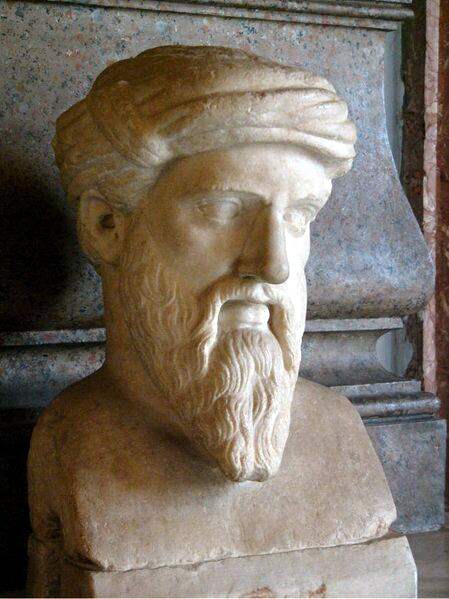
According to a fragment (Porphyrios 9) the writer Aristoxenos tell that Pythagoras left his native island of Samos, because he found the tyranny established by Polykrates abhorrent. Because of his love for liberty Pythagoras migrated at the age of fourty to Italy (Kurt von Fritz: Pythagorean Politics in Southern Italy 1977, p.17).
Porphoyrios quote Aristoxenos also in fragment 22; according to him Lacanians, Messapians, Romans ans Peuketians searched Pythagoras for his advice. The cities of southern Italy (like Kroton, Sybaris, Katane, Rhegion, Himera, Akragas and Tauromenion) made under his influence liberal laws with the help of Charondas and Zaleukos. And the tyrant Simiros of Kentoripe accepted volontarily to step down and to distribute his wealth to his sister and fellow citizens (Fritz, p. 18). According to ancient sources like Aristoxenos, Iamblichos and Porphyrios Pythagoras influenced the content of numerous constitutions throughout southern Italy and Sicilly, like those of the Lucanians and Messapians (Fritz, p. 19). The antique sources (Diogenes Laertios VII, i, 16 , Nikomarchos, Porphyrios 22 and Aristoxenos) are describing Pythagoras as a bringer of peace and freedom, which influenced on the local legislation like thuse in Zaleuos and Charondas (Fritz, p. 20).
According to Iamblichos, Pythagoras, as an old man, refused the admittion of Kylon, a rich and influential Krotonian. Kylon and its followers acted hostile toward Pythagoras and its order. Pythagoras seek refuge in Metapontum and died there. After the death of the founder of the pythagorean order, the pythagoreans are still in an state of enmity with the Kylonians (Fritz, p. 11). But, always according to Iamblichos, at the end the pythagoreans became finally so influent in southern Italy, that some poleis like Kroton came under the rule of pythagorean administrations (Fritz, p. 11f.). According to Aristoxenos and Iamblichos 248-251 descriptions of the leadership-style of the Pythagoreans they stressed that they supported, as freedom-lovers, a rather liberal type of governing. Kylon was on the other not a popular leader, according to the antique authors, but a rich debauchee. According to Iamblichos, Pythagoras, as an old man, refused the admittion of Kylon, a rich and influential Krotonian. Kylon and its followers acted hostile toward Pythagoras and its order. Pythagoras seek refuge in Metapontum and died there. After the death of the founder of the pythagorean order, the pythagoreans are still in an state of enmity with the Kylonians (Fritz, p. 11).
Pythagoras influenced as a mathematician and mystic politics and phylosophies alike.
Chapter 2: The Pythagorean Order after Pythagoras‘ death
Afterwards, always according to Iamblichos, at the end the pythagoreans became finally so influent in southern Italy, that some poleis like Kroton came under the rule of pythagorean administrations (Fritz, p. 11f.). According to Aristoxenos and Iamblichos 248-251 descriptions of the leadership-style of the Pythagoreans they stressed that they supported, as freedom-lovers, a rather liberal type of governing. Kylon was on the other not a popular leader, according to the antique authors, but a rich debauchee who took not a political, but personal vengence on the pythagorean order. The pythagoreans, after the death of Pythagoras seemed to be demanded for occupiying important political positions in the administration and government of the poleis in southern Italy. Albeit, Aristoxenos kept quit on the question if the Pythagoreans actually wanted to have political influence or even become rulers of poleis (Fritz, p. 16).
The rule of the pythagoreans in Kroton ended with an terrorist attack: the Kylonians set on fire the house of the athlete Milon, where the Pythagoreans hold a political meeting there. Only two of them survived and the leaders of the Pythagoreans in Kroton died. In the aftermath of the Krotonian Catastrophe, the city of Kroton seemed to hae taken little interest in the fate of their former rulers and the crimes of their assassins. Kurt von Fritz thinks that the Pythagoreans in Kroton hoped that their allies, the other pythagorean rulers in other cities, would come to punish the murderers (Fritz, p. 12). The pythagorean rulers could, according to Fritz, maybe not so easily decide such heavy decicsions on war and peace without risking a revolution. The will to support and avenge their allies was probably there, but the author didn’t mentioned the reasons of their „neglect“ (Fritz, p. 12f).
The two survivors of the fire were Archippos and Lysis. They suvived as „young and ablebodied“ (Fritz, p.12). The former went to Tarentum, his native city, while the latter emigrated to Achaia and afterward to Thebes, where he became the friend and tutor of Epaminondas before dying of old age. After the attack in Kroton, the Pythagoreans in the polis of Rhegion wanted to regain political influence and organised in the south calabrian city their new headquarter. After further deterioration of the political situation, they all left Italy or at least lost their influence there (Fritz, p. 13, 15). The last Pythagoreans wanted to preserve the old costums, as well as the pythagorean doctrines in their exile, even while the schooll was slowly dying out, as Diogenes Laertios and Aristoxenos wrote it (Fritz, p. 14).
Julien Sita and an informal study group, August 6th 2021.
11.000 scientifiques et trois pays ont déclaré l’état d’urgence climatique. La présidente de la commission de l’Union Européenne Ursula von der Leyen (surnommée „Flinten-Uschi“ quand elle était ministre fédérale de la défense allemande) a déclaré vouloir réduire à 55% les émissions de CO2 jusqu’en 2030. Après un été 2021 où il y a eu une série de cartastrophes naturelles impressionantes, une solution de la crise climatique devient de plus en plus pressante. Le plan de Madame von der Leyen a directement été critisé après sa publication, mais au moins elle a des mabitions et surtout un plan, ce qui manque chez certains de ces détracteurs. La situation est assez grave; dorénavant il faut aller grand ou assumer de lourdes conséquances.
L’esclavage moderne et le trafique d’êtres humains devient malheureusement de plus en plus pervasif. Pour cela il faut lutter avec encore plus de d’énergie. L’esclavage moderne mets des couches entières de la population sous l’oppression d’une autre ou plusieurs autres couche(s). Ce type d’esclavage détruit en plus les emplois légaux et augmente ainsi le chômage. Un monde plus féodal pourrait ainsi naîre.
Dans certains pays, des travailleurs au noir ne gagne pas un sous. D’autres travailleurs officiels, parfois étrangers, voire réfugiés, sont traités comme des esclaves. Certains sont même des enfants.
La question est donc comment lutter contre l’esclavage moderne et le traffic d’être humains?
Zur Zeit Catilinas konnte eine Klicke von Verschwörern gegen den Staat aufnehmen. Z.T. indem argumentiert wurde, dass diese Regierung korrupt war und durch eine andere ersetzt werden sollte. Senatoren, die mit Sulla in Verbindung gebracht wurden, konnte leicht Amtsmissbrauch, Opportunismus und Gewalt vorgeworfen werden. Ironischerweise sei Catilina auch an den Verbrechen Sullas beteiligt. Wenn dies wahr sein sollte, dann musste er dies der Masse und anderen Verbündeten verschwiegen haben, um ihr Vertrauen nicht zu verlieren. Catilina erschien aber als einer der bekanntesten Politiker Roms zu sein. War er trotz seiner Vergangenheit dreist genug den Staat korrupt zu nennen oder hatte man ihm die älteren Verbrechen zu Unrecht vorgeworfen? Beides scheint möglich zu sein, weil der politische Diskurs oft realitätsfern war, wenn oberste Interessen auf dem Spiel stehen. Deswegen log Catilina auch als er behauptete nichts von (s)einer Verschwörung gewusst zu haben.
Der Senat galt als korrupt in einer Zeit, wo viele römische Bürger durch die Massensklaverei arbeitslos wurden. Die Uneinigkeit im Senat blockierte wichtige Gesetze, die als Lösungen für die sozialen Probleme der Plebs taugen könnten. Die Kaiser haben später Propaganda betrieben, um die Bilanz ihrer Herrschaft rosiger zu gestalten als es recht war, während die Senatoren nicht wagten offen gegen den Kaiser vorzugehen. Die langen Verhandlungen im Senat brachten nicht immer ihre Früchte, weswegen Cäsar 59 und 49 oft auf eigene Faust und gegen den Konsens des Senats handelte. Mit dieser Vorgehensweise drohte die Republik unterzugehen, bzw. somit ist sie auch untergegangen. Der Senat konnte zwar den Diktator ermorden, doch blieben die Republikaner von den Feldherren Cassius und Brutus abhängig, genauso wie zuvor Cato von Pompeius. Nachdem der Senat keine mächtigen Feldherren hinter sich hatte, war es gezwungen oder angelockt worden sich mit dem Cäsarianern zu versöhnen.
Die Verteidiger der Republik wurden während den Schlachten getötet. Der Senat war von Triumvirn umgeben die heuchlerisch behaupteten die Republik wiederherstellen zu wollen. Die Cäsarianer wollten, wie Monarchen regieren und der Senat hatte nur noch die Wahl sich für den besseren potentiellen Alleinherrscher zu entscheiden. Nachdem wieder einmal ein Triumvir ausgeschaltet wurde und das Ende einer Ehe die Allianz der zwei anderen Triumvirn in Frage stellte, drohte wieder einmal ein Konflikt zwischen zwei Senatoren. Octavian und Marcus Antonius konnten, wie in den Bürgerkriegen zuvor zwei Senate errichten. Jeder Feldherr konnte seine Legitimität durch seinen Rumpfsenat oder Gegensenat beanspruchen. Nachdem Octavian Antonius besiegte und somit alle römischen Heere kontrollierte, musste er sich mit hunderten Senatoren auseinandersetzen. Durch Kompromisse mit anderen Senatoren konnte er als Alleinherrscher, im Gegensatz zu Cäsar, lange regieren. Die Balance zu halten war nicht leicht; Mordversuche der Senatoren waren keine Seltenheit.
Die utopischen Ideologien der Rechtsradikalen, die eine geschlossene Zukunft erstreben sind einfach nur undenkbar in der globalisierten Welt. Währenddessen werden die Rechtsradikalen immer gewalttätiger, selbst wenn ihre Anzahl gesunken ist. Außer verbale Gewalt (AfD) sowie Terrorismus (NSU) kriegen diese Extremisten nichts gebacken. Die
Rechtsradikalen versuchen seit Jahren in den Landtagen und im Bundestag Koalitionen mit anderen rechtsgerichteten Parteien zu formen. Ihre Umfragewerte sind aber gesunken, denn die extremen Maßnahmen, die sie seit Jahren gefordert haben, erzwang die Coronavirus-Pandemie. Das rechte Großmaulrevier reagierte willkürlich je nach Zorn und Paranoia; mit diesem Gemecker ist kein Staat zu machen. Mit Protestparteien kommen falsche Hoffnungen. Sie sind kein Opium fürs Volk, sondern Öl fürs Feuer. Unzivilisiertes Benehmen kann dabei einer Demokratie schaden. Andere Rechtsradikale, die sich Reichsbürger nennen, möchten die Monarchie wieder haben. Ich würde den nächsten Kaiser Deutschlands impeachen, wenn die Monarchie nur Geld kosten würde und sich als völlig overrated herausstellen würde. Ich bin der Meinung, dass zurzeit kein Adelsspross als Monarch taugen würde und die Monarchie in Deutschland nicht viele Touristen anziehen würde; alleine schon wegen der vielen Skandale des deutschen Adels in den letzten Jahren.




 New Ideas in public forum